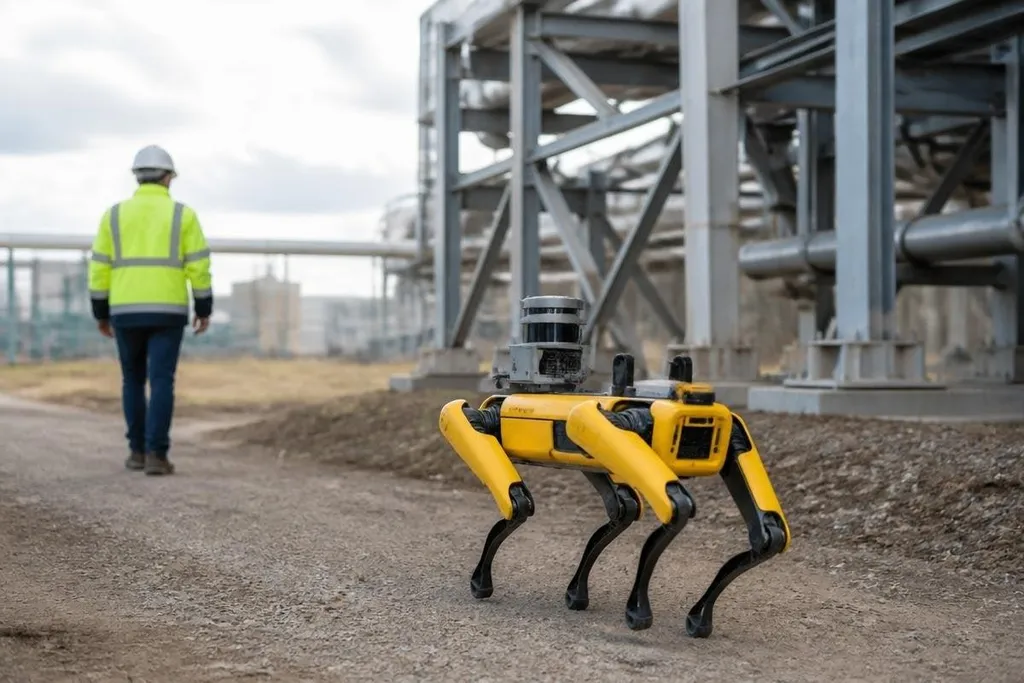
A robot dog can walk, turn, climb, and carry sensors. The harder test is what it can do for several hours without a person guiding every step.
For the next generation, buyers will need proof of useful work, safe operation, repair costs, and performance outside a polished demonstration.
- Work comes first: A patrol, inspection, mapping, or research task should be named clearly.
- Numbers matter: Look for runtime, payload, speed, operating temperature, and service limits.
- The unknowns count: Ask what the maker has tested, where the robot failed, and what still needs a human operator.
Walking is only the first test
Legged movement gives robot dogs access to stairs, rough ground, and spaces built for people. That does not make every walking robot useful in a factory, mine, power station, or research lab.
The machine needs a way to sense its surroundings and plan its path. Cameras, LiDAR, and other sensors can feed that system, while onboard software helps the robot avoid obstacles and keep its balance.
Each part adds a practical question. Can the robot keep working when dust covers a sensor? Can it stop safely when a person steps into its path? Can a technician replace a damaged leg without sending the whole unit back to the maker?
A short test on clean flooring answers none of those questions.
The useful work sits on top
A robot dog becomes useful when its walking skills support a repeatable task. That might mean carrying a sensor through a plant, checking a fenced area, recording images along a route, or collecting data in a place that is unsafe for a person.
The task needs a clear result. A patrol may require a fixed route, time-stamped images, and an alert when a reading changes. An inspection job may need the same camera angle each time so a team can compare new images with old ones.
Payload matters here. A robot that carries 2 kg may handle a camera and computer, while a heavier inspection package could require a larger frame and a shorter runtime. The maker should state the payload in kilograms and explain how that load changes battery use.
A heavier package can change how a robot dog moves, so payload claims need a named model, task, and test date. Compare those details with robot-dog reporting from Robot24.com before looking at battery use and control.
The battery and control problem
Battery life decides how much work a robot dog can finish before a charge. A maker should state runtime in hours, the test load, the walking speed, and the surface used for the test.
A figure recorded while the robot stands still has little value for a field team. You also need charging time, battery replacement cost, and the result of repeated runs. A robot that works for 90 minutes and needs two hours to charge may fit short inspections, but it may not fit a full shift.
Control matters just as much. Teleoperation means a person sends commands to the robot, while autonomous operation lets the system follow a route or respond to sensor data on its own. Many systems will use both modes, with a person taking control when the software reaches a problem it cannot handle.
That limit should be clear in the sales material. A video that shows a smooth route does not prove the robot can recover from a blocked doorway, a poor signal, or a wet surface.
What buyers should ask for
Before you compare models, ask the maker for records that connect each feature to your task.
- Task record: Name the job, route length, payload, and time allowed for each run.
- Test conditions: Record the surface, slope, temperature, rain, dust, and network connection.
- Safety details: Check the stop system, speed limits, obstacle response, and remote-control range.
- Service plan: Price spare legs, batteries, sensors, software support, and technician training.
- Proof of work: Ask for uncut task footage, failure logs, and results from more than one site.
This list also gives you a way to compare a research platform with a commercial product. A research robot may offer access to its software and sensors, while a field system may place more weight on service, training, and uptime.
The question that remains
The next generation will earn its price through repeatable work, not a single walking clip. I'd wait for published task results, full battery figures, and a clear service plan before buying one for a serious operation.
The useful question is still open: how many robot dogs can complete the same job for a full month with no hidden human work?