Overview
The term “K shaped economy” is getting a lot of attention. This is especially true in talks about economic recovery and income inequality. At Grow it Studio, we’ve noticed a lot of discussion about this economic model. It clearly shows the gap between the rich and the poor when it comes to economic growth. While it helps explain the disparity seen in post-pandemic recovery, its implications stretch far beyond just the immediate economic recovery. Here’s a closer look at what the K shaped economy is, its impact on different income groups, and its future trajectory.
What is a K Shaped Economy?
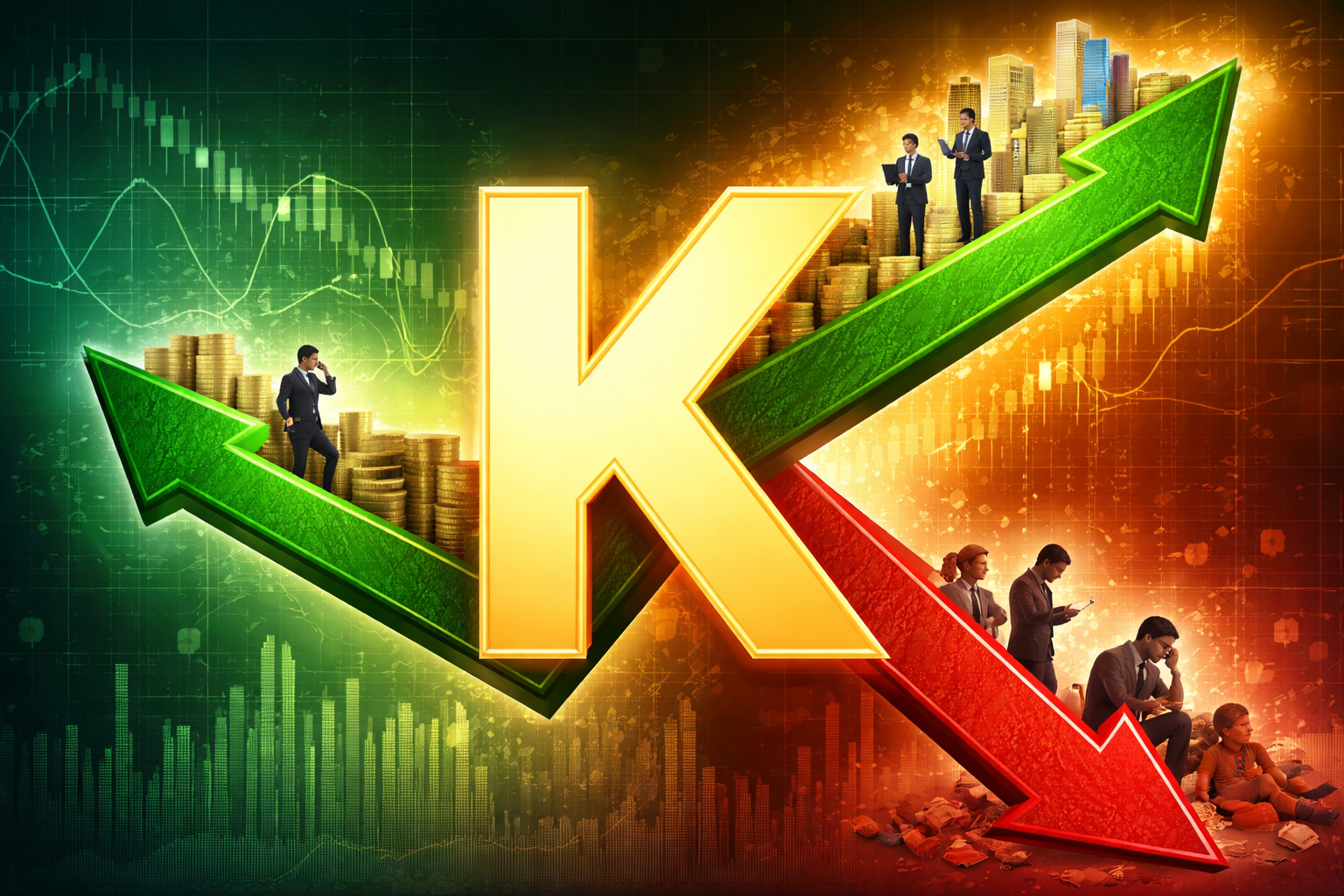
A K shaped economy describes a situation where different parts of society face very different economic results after a major shock or crisis. The “K” shape is used to symbolize this divergence. In this model, the top of the “K” represents economic growth for the wealthy. The bottom part shows stagnation or decline for lower-income groups. This type of recovery is characterized by a sharp divide where some sectors of the economy thrive, while others struggle significantly. After the pandemic, many high-income people saw their wealth grow. This rise was due to booming stock markets and higher property values. Lower-income groups faced job losses, lower income, and rising living costs. This worsened economic inequality. This trend has continued into the current economic climate, affecting everything from corporate strategies to consumer spending patterns.
Economic Disparities in a K Shaped Economy Recovery
The rise of a K shaped economy underscores the growing divide between wealthier and poorer households. For higher-income groups, the economy might seem to be thriving. Stock market values are up, real estate is booming, and corporate profits are strong. High-income professionals in technology and finance have faced few job disruptions. Many have also seen asset values and investment gains rise. On the other hand, for lower-income individuals, the economic recovery has been slow and uneven. In 2022 and 2023, lower-wage workers saw some wage growth as businesses rushed to hire. But inflation and rising costs have erased many of those gains. The higher costs of living and housing, paired with stagnant wage growth for many, have left low-income earners struggling to keep up. At Grow it Studio, we see that this dual reality of economic recovery is tough for both households and businesses. Companies that depend on middle- and lower-income consumers, like retail and hospitality, have had mixed results in recovering. On the other hand, luxury brands and tech companies have seen growth by catering to wealthier customers.
[su_quote]The rise of a K shaped economy highlights the stark divide between wealthier households thriving in a booming market, while lower-income earners struggle with inflation and stagnant wages.[/su_quote]
The Role of Technology in a K Shaped Economy
One of the key drivers of the current K shaped economy is technology, particularly advancements in artificial intelligence (AI) and automation. The rapid rise of data centers and AI infrastructure has contributed to the growing divide, benefiting tech giants like Microsoft, Google, and Amazon. These companies, often referred to as the “Magnificent 7,” have seen their stock prices soar, largely due to their heavy investments in AI. However, this tech-driven growth has not translated into widespread job creation or wage growth for the broader population. AI and automation mainly benefit those at the top of the economy. Only a few people and companies are getting the rewards. This technological divide highlights a significant concern for economists. While the rise of AI promises immense productivity gains, it also risks leaving behind a large portion of the workforce that is ill-prepared for the job shifts brought about by automation. This exacerbates the inequality seen in a K shaped economy, with technology companies benefiting while large portions of the workforce face stagnation or even job displacement.
Business Adjustments to the K Shaped Economy
Corporate executives have taken note of the economic disparity created by the K shaped recovery and have adjusted their strategies accordingly. Companies like Coca-Cola and Delta Airlines have shifted their focus toward catering to the high-income bracket while also implementing strategies to attract lower-income consumers. Coca-Cola has added premium products like Smartwater and Fairlife milk. It has also launched mini cans for cost-conscious buyers. Similarly, airlines like Delta are focusing on first- and business-class tickets, which have become key revenue drivers. However, these corporate adaptations have only deepened the divide between income groups. Luxury spending is booming, while lower-income individuals are finding it more difficult to afford everyday necessities. This divergence is likely to persist unless there are significant changes in the broader economic policies or wage structures.
The Future of the K Shaped Economy
As we move forward, it’s clear that the K shaped recovery will continue to shape the economic landscape. The economy’s path depends on how policymakers tackle rising inequality. They need to create policies that help lower-income groups. For example, addressing wage stagnation, improving access to quality education, and providing better social safety nets could help mitigate the negative effects of a K shaped economy. Moreover, with the growing role of AI and technology, there is a need for more inclusive economic growth. Ensuring that the benefits of technology are shared more evenly could help reduce the economic divide. At Grow it Studio, we closely monitor these trends as they unfold. The shift to a K shaped economy isn’t just a theory; it’s a real change. This shift affects how businesses run and how consumers interact with the economy. Grasping its complexities is key for both businesses and individuals as we adjust to this changing economy.
[su_quote]The K shaped recovery is a real shift in the economy, highlighting the need for policies that address rising inequality and promote more inclusive growth in the age of AI and technology.[/su_quote]
FAQs
1. What is a K shaped economy?
A K shaped economy means that during recovery or growth, different groups see very different results. High-income individuals and sectors may gain wealth. In contrast, lower-income groups face stagnant wages, job losses, and rising living costs.
2. How does a K shaped economy impact businesses?
In a K shaped economy, businesses must bridge the gap between rich consumers and those who are struggling. Companies targeting high-income groups, like luxury goods and tech firms, often grow. In contrast, businesses that depend on middle- and lower-income consumers may recover more slowly.
3. What role does AI play in a K shaped economy?
AI and automation shape the K shaped economy. They boost growth for tech companies, but they don’t create many job opportunities for low-income workers. The benefits of AI are largely concentrated at the top of the economic spectrum, deepening inequality.